
The Attention Crisis: Why Traditional Brand Building Is No Longer Enough
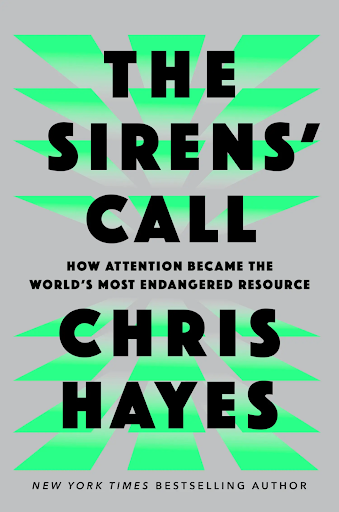
In Chris Hayes’ new book, “The Siren’s Call,” Hayes describes our current era as the “attention age,” where a constant stream of information creates a fierce competition for our focus. “We are mere cogs in the machine of ‘attention capitalism.’”
When it comes to marketing, the fight for attention isn’t just between you and your competitors anymore. It’s you vs. everything. TikTok. Netflix. Content Creators. The group chat. The news-cycle-turned-bloodsport. The millions of micro-distractions luring your customers away before they even notice your pretty little ad.
Yet, too many brands still rely on interruption marketing (Read: traditional ads), expecting their messages to land with customers already drowning in a stream of entertainment.
“People’s attention is split into tiny pieces across hundreds of different channels and their concept of what’s advertising and what’s entertainment is permanently blurred.”
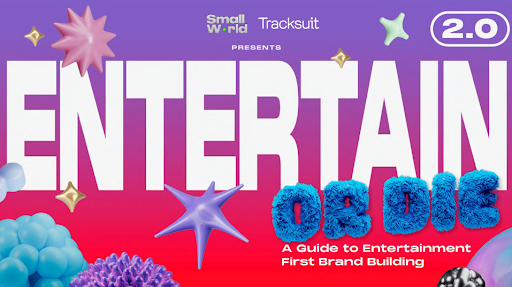
This is a quote from Entertain or Die 2.0: A Guide to Entertainment First Brand Building, a new report presented by the brand tracking platform Tracksuit in partnership with Small W•rld. The report proves out through a proprietary “Entertainment Index,” that the brands winning in today’s fragmented landscape where acquisition costs are soaring, are the ones that embrace entertainment, becoming part of people’s escapes rather than disrupting them.
Here’s the wake-up call: You need to act like an entertainer, not an advertiser. Or as the Entertain or Die (EOD) report cleverly puts it, you need less salesmanship and more showmanship.
This article isn’t meant to scare you as a marketer. It’s written to do three things:
- To equip you with the vocabulary for the evolving marketing landscape
- To provide a starting point on how to modernize your brand
- To arm you with the proof points to win over the C-Suite
The Business Case for Entertainment-First Branding
According to another study, The Awareness Advantage (presented by TikTok & Tracksuit):
- High-awareness brands get 3x the conversion rates of low-awareness brands.
- If your brand is known by 4 out of 10 customers, your performance marketing conversion rates are 43% more efficient than if known by just 3 out of 10.
- There’s zero correlation between click-through rates and brand awareness—likes and clicks don’t make you memorable.
In other words, you can’t optimize (Read: performance marketing) your way into being remembered. You have to earn attention. I even wrote about the “cost of being boring” way back in 2022.
In fact, SimplicityDX reports that “Over the last ten years customer acquisition costs have risen by 222%. Brands today lose on average $29 for every new customer acquired, up from $19 a decade ago.”
The real profit comes from the second and third sale, not just the first. That’s why brand entertainment isn’t optional—it’s essential. To win, you need to keep their attention, be memorable, and not just lure them with a one-time, low-funnel “10% off your purchase” promotion.
Re-Coding your Brand: The Entertainment-First Framework
“None of this flies in the face of traditional brand science…it’s just coded for the modern day.” – EOD
The EOD Report calls it Brand Lore, Planit calls this framework Brand Worldbuilding:
Consumers aren’t entertained by your products or services. However, they’ll engage with your characters, narratives, and universes.
- Liquid Death isn’t selling water—it’s selling a counterculture movement.
- Duolingo’s owl isn’t a mascot—it’s a chaotic internet celebrity.
- Vacation Inc. isn’t sunscreen—it’s an entire nostalgic lifestyle.
The brands that thrive today don’t just run ads—they create mythology. And, Planit has a formula for Brand Worldbuilding.
Beyond Brand Worldbuilding—or as the EOD report calls it, establishing your Brand Lore—they explore other ways brands become truly entertaining. Making it real is one: in a digital-first world, IRL experiences create moments that break through, like Airbnb turning Polly Pocket into a bookable stay or the cast of AppleTV’s Severance setting up Lumon’s offices in Grand Central Station for an hour over lunch.
Another is tapping un-standard talent—the best brand creatives today aren’t ad execs, they’re comedians, game designers, and YouTubers who instinctively know how to hold an audience’s attention.
And finally, embracing niches is key. The brands that win don’t chase mass appeal—they tap into passionate, subcultural communities that amplify them, proving once again that “there are riches in the niches.”
Making the Pitch: How to Get Leadership to Say Yes
At this point, the case for entertainment-first branding is clear: Now, you need buy-in. Frame it as brand distinction (not just “weird marketing”). The brands that build deep narratives command pricing power and loyalty.
Lead with Hard Numbers + Hard Truths
Most CFOs prioritize short-term efficiency—but the data proves that brand awareness fuels performance marketing success and cost efficiency over the long-term:
- High-awareness brands convert 3x better.
- Performance marketing is 43% more efficient when brand awareness is higher. In other words: More awareness = better marketing efficiency.
- Entertainment-first brands earn awareness in a way that drives down acquisition costs over time because long-term brand investment creates a lasting presence in consumers’ minds—rent-free.
- According to the Tracksuit Entertainment Index, 97% of the top 30 most entertaining brands reported revenue growth in 2024, with 67% experiencing double-digit growth
- Short-term clicks ≠ brand growth—you need deeper cultural resonance to stay top of mind.
- These platforms are aware of their death grip “monopoly on attention” which has allowed them to push up CPMs. If your brand is going to invest in these impressions, make it worth it.
Pilot, Don’t Overhaul…Yet.
- Suggest a test—an entertainment-driven campaign or content series to measure earned engagement and growth.
- Socialize this concept internally and partner with an agency like Planit to help establish the brand world framework and the vision for your “de-coded” brand in the modern age.
- Show a small win before asking for big shifts; Set simple KPIs with the C-Suite.
- Remember: Duolingo’s secret sauce wasn’t built overnight—it started with a single experiment and evolved over time.
The Bottom Line
Chris Hayes’ The Sirens’ Call warns of an age where our attention is relentlessly harvested, fragmented, and sold. Consumers are drowning in an endless sea of content, bombarded by brands and creators all screaming for a fleeting moment of recognition. Most will be ignored.
The ones that survive? They don’t endlessly pay and optimize for attention—they earn it. They don’t interrupt the culture—they become part of it.
It’s showtime.