
“Oh, that’s clever.” It’s the response every brand dreams of—a campaign strategy that resonates.
That kind of reaction starts with an insight: a sharp observation or universal truth that just hits different.
But, that insight requires a big idea to make it come alive. The real magic lies in pushing those ideas to their full potential. As a strategist, I’ve seen countless clever headlines. The challenge is turning that headline into a campaign that not only resonates but finds new life across multiple channels.
So, how do you do that?
The Foundation of a Great Campaign Idea
Start With the Creative Brief
Every great campaign is grounded in a strong foundation. That foundation is the creative brief.
A brief isn’t just a box to check off before diving into the creative process. It’s like a map legend, designed to decode the consumer problem and reveal the insight or cultural tension that will guide the campaign.
What Makes a Great Creative Brief?
The structure we use, —Get, Who, To, By, created by Martyn Straw at BBDO New York—ensures that every concept starts with clarity:
- Get: Who are we talking to?
- Who: What’s standing in their way?
- To: What do we want them to do?
- By: What insight or universal truth will unlock what’s standing in their way?
The insight in your brief should act as a springboard for creative exploration. It’s the lens through which we uncover ideas that resonate.
The Power of Universal Truths: The “By” Statement
By: What insight or universal truth will unlock what’s standing in their way?
Great insights are revelations in plain sight. They’re human truths that make people say, “Ha, that’s so true.” Think about the observational humor of comedians like Demetri Martin (“I think the worst time to have a heart attack is during a game of charades. Especially if your team is bad at guessing”) or Mitch Hedberg (“I like an escalator because an escalator can never break. It can only become stairs.”).
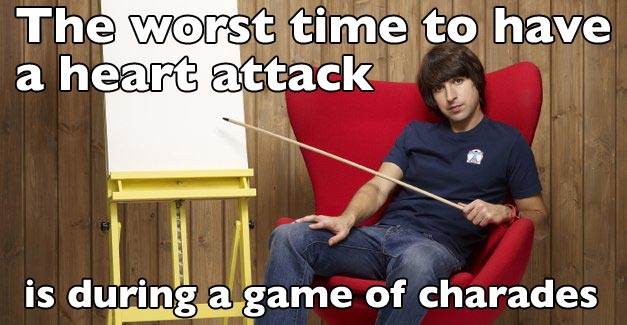
They take everyday truths—waiting in line, awkward small talk, procrastination—and reflect them back in a way that’s fresh, funny, and profoundly relatable.
Advertising works the same way. When your insight hits a nerve or strikes a chord, it’s a sign that your idea might have campaign potential.
Evaluating an Idea’s Campaign Potential
The Headline Test
A clever headline is a strong start, but it’s just that: a start. To determine whether your idea is campaign-worthy, ask yourself these questions:
- Does it tap into the universal truth or insight? (Does it instantly cause a creative lightbulb to turn on?)
- Does it have inherent tension or conflict? (For instance: Does it tap into a debate, disrupt expectations of the industry, or shape an opinion?)
- Is it scalable across multiple channels? (How do you see this coming to life in a social media campaign or experiential event?)
- Is it fresh and distinctive? (Are the competitors kinda saying the same thing? Could they?)
Scalability: Taking Ideas From Literal to Lateral
It’s easy to fall into the trap of thinking literally, taking the insight or observation at face value. But the best campaigns stretch ideas laterally, exploring its scalability.
Let me explain through some examples:
Insight: “People secretly love re-gifting.”
- Literal Execution: A single ad showing a humorous re-gifting scenario.
-
Lateral Approach:
- Storytelling: A “Misfit Gift” campaign where you follow the years-long stories of a personified sad little gift that has never found a home.
- Experiential: A pop-up “Re-Gift Exchange” where people trade unwanted gifts.
- Exclusive Merch: Tongue-in-cheek “re-gifting kits” complete with a partnership with BiC “Wite-Out” to re-use the to/from labels.
Insight: “Canceling plans is the ultimate form of self-care.”
- Literal Execution: A single ad showing someone joyfully canceling plans.
-
Lateral Approach:
- Explore metaphors: What if canceling plans felt like winning the lottery or finding a hidden treasure?
- Expand situations: Where else do people experience the joy of opting out? Consider using AI to generate witty “Out of Office” messages or creating a hotline that helps people craft clever excuses for canceling plans they initially RSVP’d “yes” to.
- Flip perspectives: How does the person on the other side of a canceled plan feel?
Ways to Stretch Your Ideas Laterally
“What Else Does This Feel Like?”
Use metaphors and parallels to expand the insight. If the insight is about procrastination, what other behaviors or cultural moments mirror this? For example, procrastination might feel like the unrelenting tension of a countdown clock stuck just above zero, as the hero endlessly dawdles to make a decision.
Turn It Upside Down
Flip the insight on its head. If your idea centers on a common tension, explore the opposite perspective. Procrastination, for example, might become a celebration of last-minute brilliance.
Pro tip: Use ChatGPT to list out counter-intuitive ideas relating to your insight or clients’ industries.
Ask “What If?”
Challenge assumptions and have a bold notion. What if you position procrastination as a soft skill that employers find attractive? See how this idea plays out on LinkedIn. Start a debate.
Exaggerate the Truth
Push the insight to absurd levels to see where it leads. For example, imagine procrastination as believing the entire world revolves around your schedule—complete with NASA control rooms panicking as the Earth slows on its axis while you agonize over a lunch order.
Judging Your Evolved Idea
Revisit the creative brief.
- Does the idea still resonate emotionally?
- Is it solving the problem outlined in the brief?
- Does it align with the business goal/brand and resonate with the intended audience?
The best ideas maintain their emotional core while proving adaptable across touchpoints.
Fan the Spark and Start a Fire
Turning a clever headline into a full-blown campaign isn’t easy. But by grounding yourself in strategy, pushing ideas laterally, and evaluating them rigorously, you can unlock their full potential.
As strategists, we lay the foundation. As creatives, you fan the spark and ignite the fire. Together, this alchemy transforms ideas into gold.